
Lifelock and IdentityGuard are two prominent agencies that have created their success off the backs of criminals, specifically identity thieves. In this Digital Age, it is easier now more than ever to have your identity stolen. It is not simply unsuspecting grandparents who naively offer their information to strangers over the phone, anyone can be a victim.
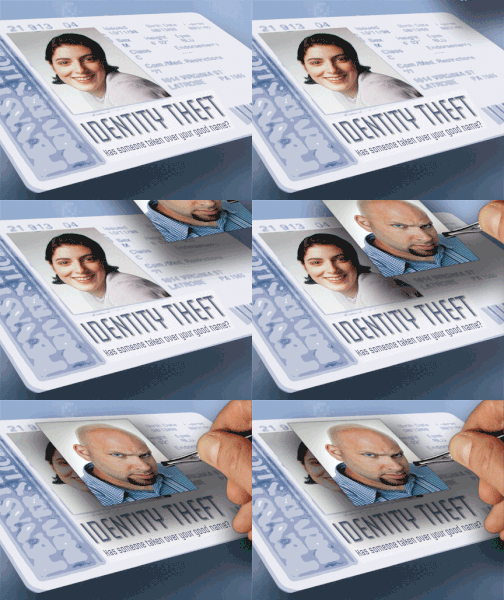
Identity theft is what it sounds like, someone steals your identity and commits acts in your name. How do you prevent that? Well there’s no foolproof way to prevent it, but you can reduce the risk of being a victim.
1. Guard your Social Security card
Do not carry your social security number in your wallet. Your social security card is the golden key to your life. Anything can be fabricated as long as someone has access to your nine digit lifeline.
2. Protect your technology
Password protect all your devices. Install virus software and firewalls onto your home computer and router. Turn off your bluetooth if you’re not using it and avoid using public wifi. If you do use public wifi, do not go to personal websites, like bank accounts or IRS.gov.

3. Do not open anonymous attachments.
Beware of attachments in your emails or social media messages. Scammers have evolved by hacking an account and posing as a friend of yours asking for personal information. For someone who is unsuspecting, it may seem trustworthy because it is from a friend’s account, however it is not. After the information is sent, the hacker relinquishes the account and now has access to your bank information including your user name and password.
4. Make your passwords tricky
Use complex passwords that are not easily assumed. Yes, using your middle name and birthday is easily guessable. Instead, opt for a mixture of capital letters and special characters to create a password. Do not use the same one for everything or generic answers for security questions. It may make things easier for you, but it also makes things easier for a hacker.
5. Don’t forget your mail
Collect your mail everyday. Although this seems fairly mundane. Important information is held in those tiny envelopes. Anything that is valuable can put you at risk for being a victim. If you are unable to collect your mail for an extended amount of time, the USPS can place a hold on your mail.
6. Monitor your bank alerts
In order to combat the rise of identity theft, various companies like Chase bank have implemented safety nets for their consumers. Alerts are immediately sent to your phone or email for suspicious activity. Authentication steps are an additional security measure that can be used to make access to your accounts harder.
7. Know if you are a victim
Warning signs of identity theft include:
- Rejection notices for loans you didn’t apply for.
- Bills for items you didn’t purchase.
- Debt collectors calling for debts that you never began.
If you feel you are a victim of identity theft, report it to the Federal Trade Commission (FTC) online at IdentityTheft.gov or by phone at 1-877-438-4338.
 AKIRA
AKIRA 
Leave a Reply